
Medieval Defense & Conquest
Vojtech JesatkoStrategy
4.5160.00 Reviews
- Version
- 260817.66
- Installs
- 500.00K
- Age Rating
- Everyone 10+
Screenshots
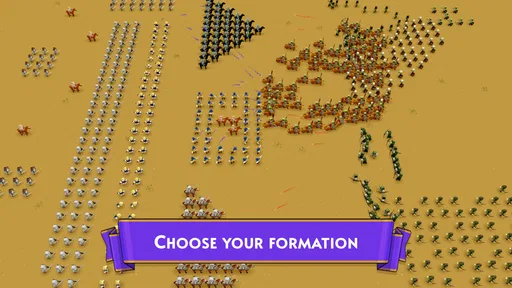
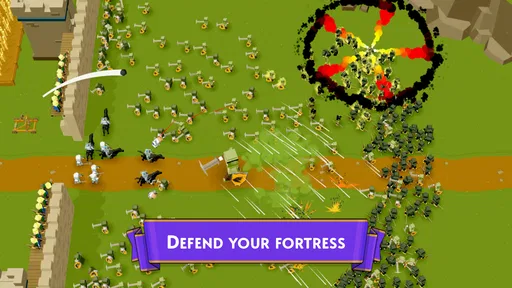
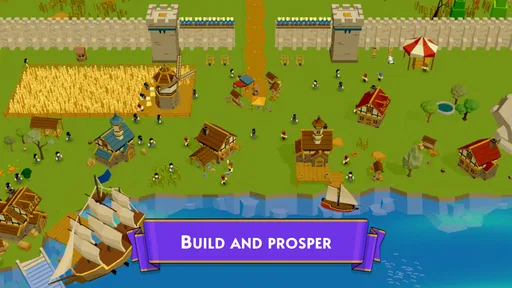
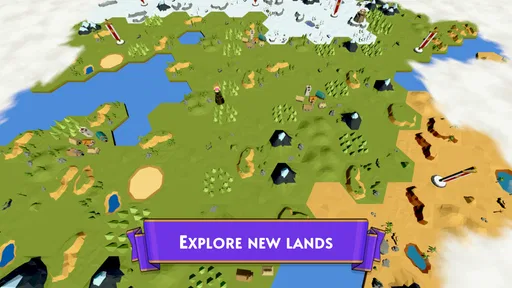
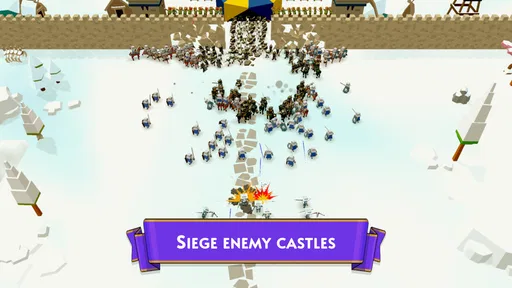
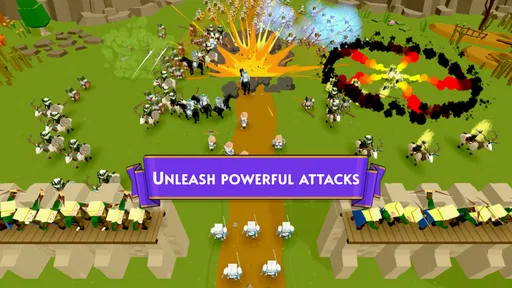
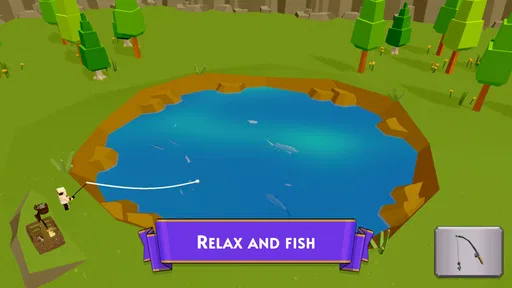
Our Review of Medieval Defense & Conquest
 Analysis by Appyee
I approached Medieval Defense & Conquest expecting a straightforward medieval strategy game, but I found that its appeal depends less on spectacle and more on the small decisions made before a battle becomes difficult. You defend an empire, build armies, and push toward conquest, yet the enjoyable part is working out how to spend limited attention: strengthen what is vulnerable, prepare the right force, and avoid treating every fight as something that can be solved by simply adding more troops.
That makes it an interesting choice for players who like strategy with a clear theme and a compact mobile format. It is free to play, rated for Everyone 10+, and comes from developer Vojtech Jesatko. The game has reached over 500 thousand installs and holds a 4.5 average from around 9 thousand ratings, which suggests that its basic formula has found a sizeable audience without needing to appeal to every kind of strategy fan.
How the current game feels to play
The central loop is easy to understand. I defend territory, develop an army, and look for opportunities to expand. That clarity matters on a phone because I can start playing without first learning a complicated set of menus or a dense fictional history. The medieval setting gives the decisions a natural shape: walls, armies, territory, and pressure from opposing forces all fit together in a way that is immediately readable.
What I like most is that the game encourages me to think in terms of preparation rather than reaction. A battle is rarely just about tapping an attack option. I need to consider whether my current strength is enough, whether an earlier investment has left another part of the empire exposed, and whether conquest is worth the risk at that moment. Even when the interface keeps the rules accessible, those choices give the game more weight than a purely decorative castle-building experience.
A realistic use case is a short evening session after a busy day. I can check the state of my empire, make a few deliberate improvements, and attempt one carefully selected advance instead of committing to a long gaming appointment. That makes it more suitable for players who enjoy returning to a strategic position repeatedly than for someone looking for a fast arcade match with an obvious finish.
The game also works for people who enjoy a medieval theme but do not want to begin with a highly complex grand-strategy title. It presents the familiar fantasy of defending a realm and building military power without requiring the player to understand a large historical simulation first. I would especially recommend it to someone who likes planning around threats and gradually improving a position.
On the other hand, I would not choose it for a player who wants a story-led adventure, a character-focused role-playing game, or a competitive strategy experience built around constant live interaction. The emphasis here is on managing a warlike empire, not on following a cast of heroes or watching a cinematic campaign unfold. Players who prefer immediate action may also find the preparation phase slower than expected.
Why the simple premise still has strategic depth
The useful distinction is between having a large army and having an army that is ready for the next problem. It is tempting to spend every available resource on visible military growth, but that can create a fragile empire. A stronger force may help with conquest while leaving defense behind, and a successful attack can still be a poor decision if it consumes the capacity needed for the next threat.
My practical advice is to treat each expansion as a test of the whole empire rather than as an isolated victory. Before committing, I look at what the move changes: which area becomes harder to protect, how much recovery it may require, and whether the new position actually improves my options. This habit is more valuable than chasing every available opportunity.
A second useful approach is to separate “safe progress” from “ambitious progress.” Safe progress means improving the position until a setback is manageable. Ambitious progress means accepting that a failed push may force a period of rebuilding. The game is more enjoyable when I make that choice consciously instead of assuming that every attack should succeed.
The medieval theme also helps communicate priorities. A defensive improvement feels worthwhile when the empire is under pressure, while military expansion feels more attractive when the surrounding position is stable. That connection between theme and decision-making is one of the game’s strengths: the setting is not merely a skin placed over unrelated actions.
Managing attention on a smaller screen
Mobile strategy games often fail when they demand too much checking without giving the player a clear reason to return. My experience with this title is better when I use a simple routine. I first inspect the overall position, then decide whether the next action should be defensive, economic, or military, and only afterward commit to a battle or expansion. That order prevents me from making an attack before noticing a more urgent weakness.
This workflow is particularly useful on a phone, where interruptions are normal. If I am playing during a short break, I prefer to finish with a clear next objective rather than beginning several actions at once. The game’s premise supports that style because the main goals remain understandable: protect the realm, build strength, and conquer when the position allows it.
There is also a trade-off here. A compact strategy loop can feel satisfying because it removes unnecessary complexity, but experienced players may eventually want more layers, more ways to specialize an empire, or more reasons to revisit a completed decision. Whether that becomes a serious limitation depends on what you expect from the genre. For a focused mobile strategy game, restraint can be a virtue; for a long-term strategy hobby, it may feel restrictive.
Development, version context, and the experience for returning players
The game was released on December 24, 2025, and the current version is 260817.66. Those details place it in a relatively early stage of its public life compared with long-running strategy games that have accumulated years of systems and content. I see that as an important part of the current experience: the game has a clear identity, but players should judge it as a developing product rather than assume it already has the breadth of an established strategy platform.
The version number shows that the game has moved through multiple iterations, but a version number alone does not tell me that every area has been transformed. I would separate what is visible now from what might reasonably improve later. The current evidence is the playable medieval defense-and-conquest loop, its accessible presentation, and its existing audience. Future depth, balance changes, or additional systems should be treated as possibilities rather than promises.
For a new player, this is a good moment to decide whether the core loop itself is appealing. If I enjoy the present rhythm of preparing an empire, weighing military choices, and expanding carefully, later refinements would be welcome rather than necessary. If I already need extensive campaign variety or advanced strategic specialization before I can have fun, a future update may not solve that basic mismatch.
Returning players may notice that the current version is best approached with fresh expectations. Instead of assuming that the game will behave like a large PC strategy title, I treat each session as a compact planning exercise. That makes the experience less frustrating because I am judging the game on the decisions it actually offers, not on systems I wish it had.
The free entry point is another meaningful part of its evolution. I can try the strategic loop without paying first, which lowers the risk for curious players. At the same time, in-app purchases range from $0.99 to $38.99 per item. That does not automatically make the game unsuitable, but it means I would recommend deciding on a personal spending limit before becoming invested in progression or convenience.
My preferred approach is to play long enough to understand whether the strategic decisions are enjoyable without spending. If the game remains satisfying through careful planning, purchases become optional rather than a condition for discovering its appeal. Players who dislike any form of monetization should be more cautious, while those comfortable with optional purchases can evaluate them based on whether they improve convenience or change the balance of the experience.
What the game does well for existing users
For players already familiar with the game, the strongest benefit is continuity of purpose. Defending and conquering are not disconnected activities; they create a cycle in which every military gain changes the defensive problem. That gives returning sessions a practical focus. I am not simply collecting improvements because the game tells me to. I am trying to make the next position easier to hold than the last one.
The game’s category also works in its favor. As a mobile strategy title, it is easier to approach than many alternatives that present a large map, numerous factions, and long explanations before the first meaningful choice. I can recommend this one to a friend who wants medieval warfare in a manageable format, especially if that friend values understandable goals over encyclopedic detail.
Another strength is the room for personal pacing. A cautious player can emphasize stability, while a more aggressive player can accept greater exposure in exchange for faster expansion. That does not mean every style will be equally powerful, but it gives the player a reason to reflect on the kind of ruler they want to be. The best sessions are the ones where my decisions feel intentional rather than automatic.
There is a subtle advantage in keeping a short record of mistakes. After a failed push, I ask whether the problem was insufficient preparation, poor timing, or an empire that had become too widely stretched. That question turns defeat into useful feedback. It is a better way to learn the game than simply repeating the same attack with a slightly larger army.
Where the experience may still feel limited
The same accessibility that makes the game approachable can reduce its appeal for advanced strategy players. If you want diplomacy, detailed economic simulation, highly specialized factions, or a deep narrative campaign, this is probably not the right destination. A larger strategy alternative may offer more freedom and a stronger sense of a living world, even if it takes longer to learn.
I also see a potential tension between the game’s free starting point and its purchase range. Players who enjoy optimizing every advantage may feel pressure to compare their progress with what spending can provide, even if the core game remains playable without it. That can change the mood from planning an empire to managing a personal budget of patience and money. I would rather approach the game as a free trial of the strategy loop first.
The mobile format brings another limitation: sessions can be convenient, but the smaller screen may make strategic information less comfortable to process than on a tablet or computer. If the game presents several decisions at once, I prefer to slow down and avoid tapping through menus quickly. This is not a flaw unique to the title, but it affects how enjoyable careful planning feels.
Players should also consider the age rating of Everyone 10+. That makes the game suitable for a broad audience, but it does not mean the experience is designed for very young children or that every strategic decision will be simple. The rating fits a medieval conflict theme while leaving room for thoughtful play, which is useful for families choosing a strategy game that is not aimed at adults only.
How it compares with familiar alternatives
Compared with a traditional tower-defense game, this title feels broader because the focus is not limited to stopping waves at one fixed location. The empire-building and conquest angle asks me to think beyond the next attack. If I want immediate placement decisions and clearly timed enemy waves, a dedicated tower-defense game may be more satisfying.
Compared with a grand-strategy game, Medieval Defense & Conquest is easier to enter and less intimidating. I do not need to approach it as a historical sandbox with countless interacting systems. The trade-off is that players who enjoy diplomacy, politics, trade routes, or detailed faction management may find a larger alternative more rewarding over many weeks.
It also differs from a real-time multiplayer strategy game. Here, the appeal is personal planning and the gradual shaping of an empire rather than the pressure of reacting to a human opponent every second. That makes it better for relaxed solo sessions, but worse for anyone whose favorite part of strategy is adapting to unpredictable players.
For a friend choosing between this and a character-driven role-playing game, I would ask what they want their decisions to mean. In this game, choices mainly affect military readiness and territorial control. In a role-playing game, choices may instead shape characters, dialogue, or a story. Neither approach is better, but they satisfy different moods.
Practical advice before committing
I would begin by playing conservatively and learning what the game considers a strong position. Avoid treating the first successful attack as proof that every nearby target is worthwhile. Build a habit of checking the empire after each major move, because conquest can create new responsibilities as quickly as it creates new opportunities.
I would also keep purchases out of the early learning process. Since the game is free to start, I can discover whether the planning loop holds my attention before deciding whether any optional item is worth money. If I eventually spend, I would choose a fixed limit and judge the purchase by the time it saves or the enjoyment it adds, not by fear of falling behind.
For interrupted play, I recommend ending each session with one clearly defined intention: reinforce a weak area, prepare a military push, or wait until the empire is stable. This reduces the chance of opening the game later and making a rushed decision without remembering why the previous position was created.
I would skip the game if my priority is a fully featured historical simulation, a deep story, or a purely competitive battlefield. I would also skip it if the presence of in-app purchases makes free-to-play strategy uncomfortable from the beginning. A different game will be a better fit in those cases, even if this one is well made for its narrower purpose.
What I would watch as the game develops
Because the current version is 260817.66 and the release is recent, I would watch how the developer handles long-term variety and balance. The important question is not simply whether more content appears, but whether new additions create meaningful strategic choices instead of adding more steps to the same routine.
I would also pay attention to how the game supports different player types. Newcomers benefit from clarity, while experienced players need reasons to experiment after they understand the basic loop. The healthiest direction would preserve the approachable medieval defense concept while offering more depth for people who have already mastered cautious expansion.
Another area worth watching is the relationship between free play and purchases. A good evolution would keep the strategic decisions understandable and satisfying without making spending feel like the only sensible route. Since the available items cover a wide price range, transparency and balance will matter to anyone deciding whether to remain a free player or support the game financially.
Finally, I would look for improvements that make returning to an existing empire feel meaningful. Better decision feedback, clearer consequences, and more varied reasons to defend or conquer would strengthen the game without requiring it to become a completely different genre. Those are expectations, not promises, but they are the changes that would most improve its long-term value in my view.
My overall recommendation is positive but specific. Medieval Defense & Conquest is a good fit for someone who wants an approachable medieval strategy game built around protecting an empire, growing an army, and choosing when expansion is worth the risk. I enjoy its clear premise and the way a successful conquest can create a new defensive challenge.
I would not present it as a replacement for every strategy game on mobile. Its free-to-play structure, compact scope, and developing identity will not satisfy everyone, particularly players seeking a huge simulation or a competitive multiplayer battlefield. But if you want a manageable game for thoughtful solo sessions, are willing to learn through cautious decisions, and prefer trying before spending, it is an easy one for me to recommend. The best way to play is patiently: protect the position you have, understand the cost of each advance, and let the quality of your decisions matter more than the size of your army.
Verdict
Strengths of Medieval Defense & Conquest
- Simple controls make the game easy to pick up.
- Castle upgrades add satisfying long-term progression.
- Different unit types encourage varied defensive strategies.
- Short battles fit well into quick gaming sessions.
- Medieval visuals and sound effects create a pleasant atmosphere.
Limitations of Medieval Defense & Conquest
- Later stages can feel repetitive without enough gameplay variety.
- Some upgrades may require considerable grinding.
- Difficulty spikes can make certain levels frustrating.
- The interface may feel crowded on smaller phone screens.
- Progress may feel slower for players who avoid optional purchases.
Similar Picks in This Category
View All
Clash of Clans
Supercell4.5

Plants vs. Zombies™
ELECTRONIC ARTS3.7

Lords Mobile: Kingdom Wars
IGG.COM4.5

Clash Royale
Supercell4.4

State.io — Conquer the World
CASUAL AZUR GAMES4.1

Car Driving School : Car Games
Spark Game Studios3.9
Frequently Asked Questions
What is Medieval Defense & Conquest?
Medieval Defense & Conquest is a strategy game that combines tower defense with kingdom-building and conquest mechanics. Players defend their territory against enemy waves, develop medieval forces, improve defensive structures, and expand their influence across the map. Success usually depends on choosing the right units, upgrading efficiently, and adapting your strategy to different enemy types and battle conditions.
How does the gameplay work in Medieval Defense & Conquest?
The game generally revolves around preparing your defenses before an attack, placing or improving defensive units, and managing resources during and between battles. As you progress, enemies become stronger and may require different tactics. You can also strengthen your kingdom by unlocking upgrades, expanding your territory, and improving your army, making planning just as important as reacting quickly during combat.
Is Medieval Defense & Conquest free to download and play?
Medieval Defense & Conquest can typically be downloaded for free, although the exact availability and monetization may depend on whether you use Android or iOS. Like many strategy games, it may include optional in-app purchases for resources, upgrades, or progression boosts. These purchases are not necessarily required to play, but users should review the store listing and payment settings before downloading.
Can I play Medieval Defense & Conquest without an internet connection?
Offline availability may vary depending on the game mode and the version installed on your device. Some basic or previously unlocked content may work without a connection, while features such as advertisements, cloud saving, events, leaderboards, or online battles may require internet access. It is best to check the official store description and test the game after installation if offline play is important to you.
Is Medieval Defense & Conquest suitable for beginners?
Medieval Defense & Conquest can be approachable for new players because its core objective—defend your territory and defeat invading forces—is easy to understand. However, later stages may demand careful resource management, unit selection, and defensive positioning. Beginners should follow the tutorial, avoid spending resources too quickly, and experiment with different strategies rather than relying on a single type of troop or defense.
Play our best games!


